
Fate Lines
Palm Glyph — Fate Lines
The hand writes the earth
Ink on xuan paper; high-resolution scan and vector refinement (Ai/SVG).2022
Ai/SVG)。
from my own palm lines, this “proto-script” turns the body’s map of time into writing.
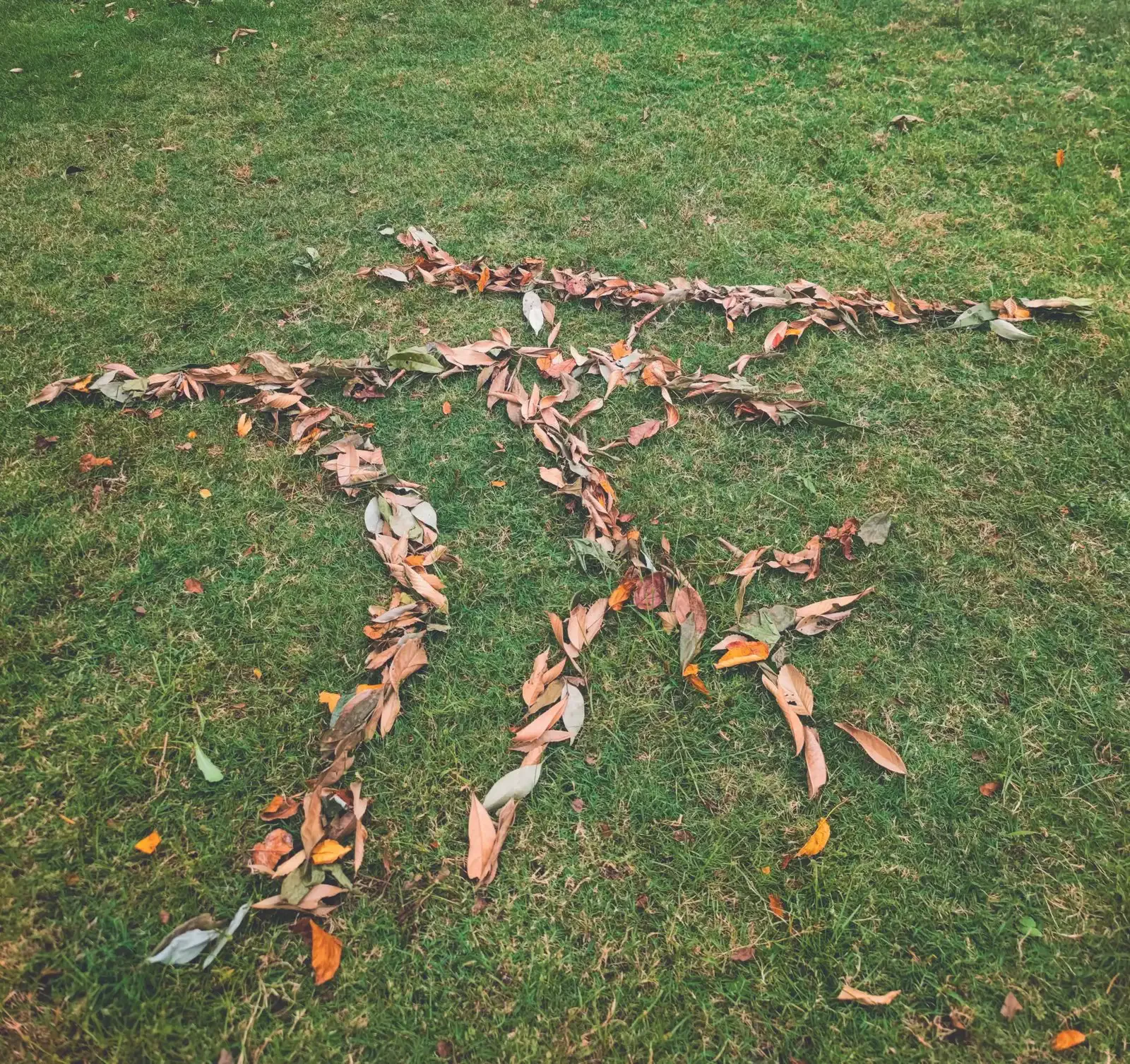
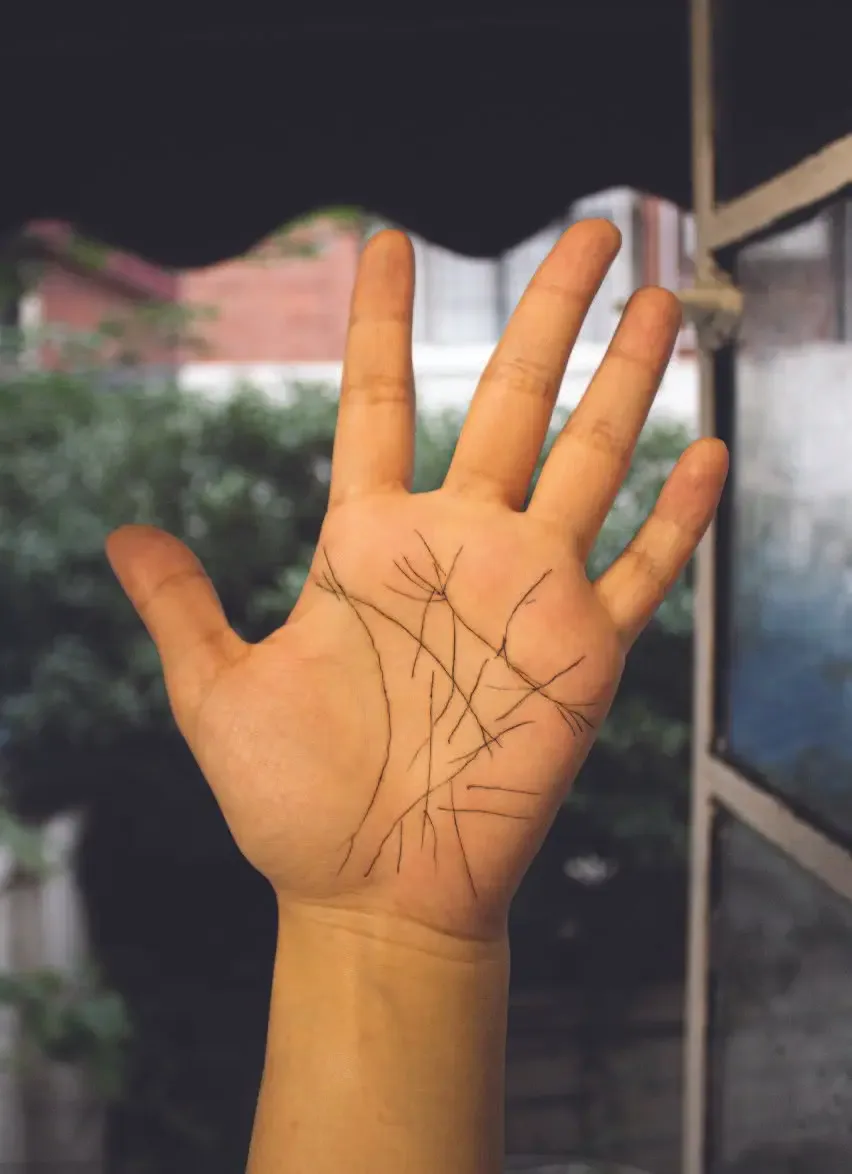
This piece originates from a body-based drawing protocol I developed while researching fate, palmistry, and early writing systems. I first photographed my palm, then traced the major lines—life, heart, and head lines—together with minor branches. From these vectors of pressure and time I composed a single “proto-character,” a mark that does not encode a sound but condenses movement and duration.
The form was written with Chinese ink on xuan paper to retain breath, drag, and dry-edge; afterward I digitized and refined the contours into a clean vector so the glyph can migrate across media (print, engraving on stone, silk-screen, or as a sign within installations). Conceptually, the work treats the body as an archive and writing surface: destiny is not a given schema but a diagram you can rewrite. The piece also dialogues with my knotting and coal-based projects—where line becomes knot, seam, fissure, and finally script.
Description(CN)
/
